


Blue wave or tsunami? Democrats poised for midterm gains, but how big?
Blue wave or tsunami? Democrats poised for midterm gains, but how big?
20
Share

Phillip M. Bailey, USA TODAYMon, November 2, 2026 at 11:11 AM UTC
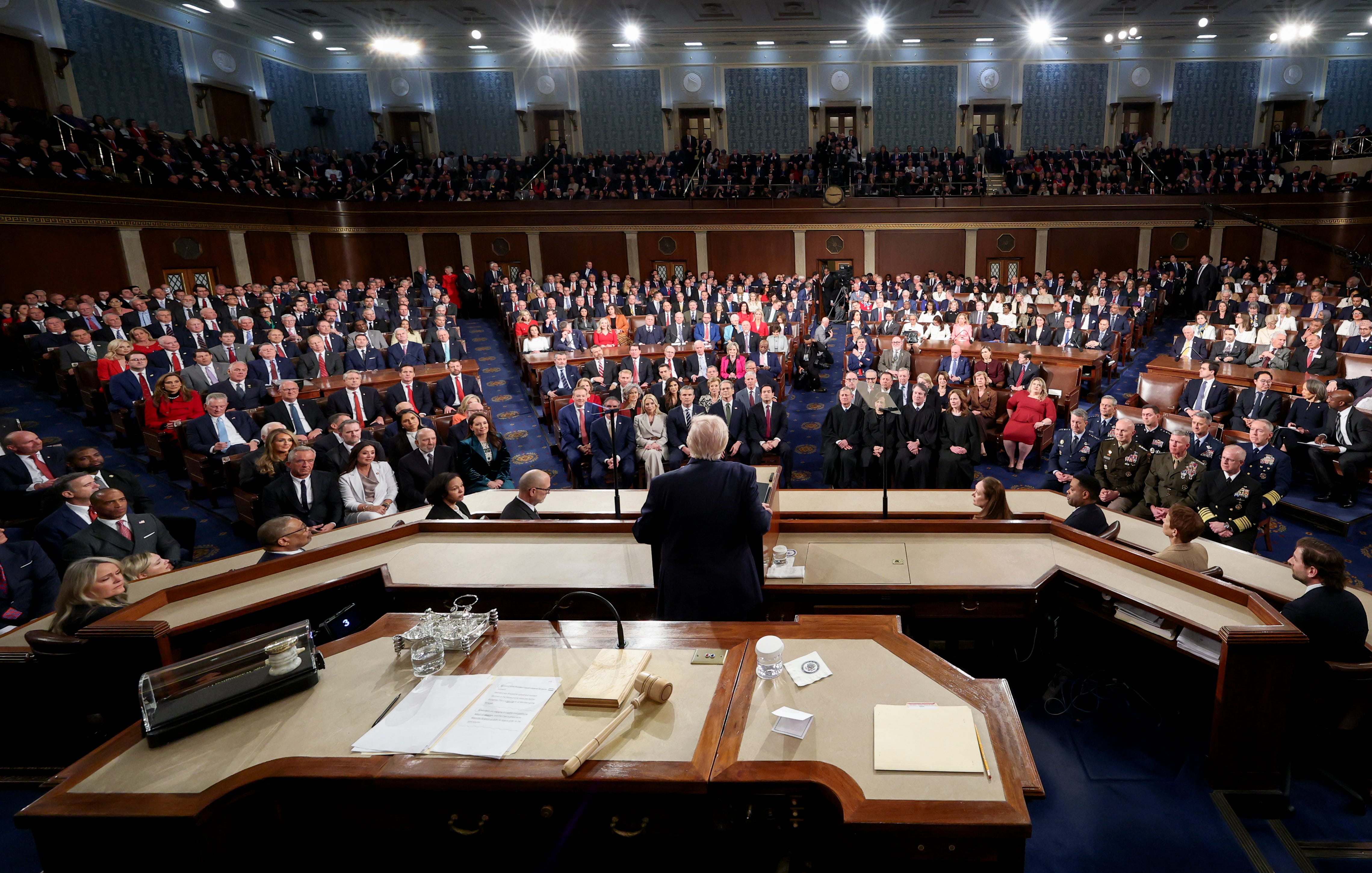
Democrats are expected to make significant gains in Congress, governors' mansions, and statehouses nationwide on Nov. 3, but how far and wide the so-called "blue wave" will reach remains uncertain.
In addition to expected wins in traditional battlegrounds such as North Carolina, Democrats hope the wave will wash over states President Donald Trump won by double digits in 2024, such as Texas, Kansas and Ohio. The Trump administration and its allies scrambled to shift resources to shore up these historically conservative strongholds, while giving up on keeping the tide from wiping out vulnerable suburban Republicans, such as Rep. Tom Kean Jr., R-New Jersey.
In anticipation of the midterm elections, which typically benefit the party out of the White House, many Republican-led state legislatures redrew congressional districts to bolster their party's odds. Even so, every nonpartisan projection shows Democrats heavily favored to win a majority in the House of Representatives.
Whether Democrats will also win a majority in the Senate, despite needing to flip seats in at least three states Trump carried in 2024, remains less certain but increasingly likely.
An unpopular incumbent president
The primary reason for Republicans' grim outlook is Trump, whose job approval poll numbers have sunk to historic lows. A Fox News survey released Oct. 14 found Trump's approval rating at 36%, while 64% of registered voters said they disapproved of his job performance. That marks the lowest approval rating he has received in the network's polling during either of his two terms.
Typically, when a president's job numbers are below 50%, their party loses an average of 36 seats, according to Gallup, a leading pollster.
Other critical yardsticks of voters' confidence in the country's direction have also plummeted amid skyrocketing fuel costs spurred by a war with Iran, which infuriated voters who trusted Trump's campaign promises to halve energy costs in his first year in office, "end" inflation, make groceries cheaper and avoid foreign wars.
The University of Michigan's consumer sentiment index, which has tracked how Americans feel about the economy for nearly 80 years, recorded its second-lowest score in history in October.
Democrats have pounced on affordability in campaign speeches, political advertisements and debates.
"So many broken promises," Sen. Jon Ossoff, D-Georgia, said during an Oct. 7 rally in Savannah. "More people are unemployed; the wars are still raging; the debt is exploding; (and) prices are going up."
Ossoff is the only Democratic senator seeking reelection in a state Trump won in 2024. Polls show him running away with what was once considered Republicans' best opportunity to pick up a Senate seat.
Tatishe Nteta, a political science professor at the University of Massachusetts Amherst and director of UMass Poll, said Trump has become the central figure across multiple demographics and areas ahead of what could be the worst midterm debacle since the 2006 elections amid President George W. Bush's second term.
"If we're correctly capturing the sentiment of Americans, then what we're seeing is a repudiation of President Trump and his agenda, his policies and his vision for the future of the country," Nteta said. "And this is affecting Americans in red states and blue states."
Trump losing independents, MAGA faithful at critical juncture
Through much of the final stretch, Trump has been visiting areas that are normally reliably Republican, including holding rallies in Alaska, Ohio, and Texas.
Despite Trump's preferred candidates performing well in Republican primaries, divisions over the Iran war and disillusionment over rising costs have diminished the "Make America Great Again" movement's popularity. A national University of Massachusetts Amherst Poll released Sept. 10 backs found a 9 percentage point drop among GOP voters who identify with MAGA compared to March.
Even more troubling for the administration and its supporters are surveys showing just 13% of U.S. adults saying they "strongly approve" of the job Trump is doing, according to a Focaldata-Financial Times poll, released Oct. 11. That is a noticeable collapse when compared to previous metrics that showed roughly 26% of Americans saying the same in a Quinnipiac University poll released in May.

As a result, Republicans are in such a defensive crouch that Senate Leadership Fund, a GOP-aligned super PAC, canceled ads in North Carolina, where holding retiring Republican Sen. Thom Tillis' seat appears increasingly out of reach. Meanwhile, GOP money has been pumped into Kansas, where Democrats haven't won a Senate race since 1932.
The Congressional Leadership Fund, a super PAC aligned with Republican House leadership, made a similar choice when it redirected $10 million from various races in October, including Iowa's 10th Congressional District, where Republican Rep. Mariannette Miller-Meeks' race was moved from "toss-up" to "lean" Democratic by the Cook Report.
John Opdycke, founder and president of Open Primaries, a group that advocates for nonpartisan primaries, said Republicans are suffering from alienating independents. According to Gallup, 45% of voting-age Americans identified as independents in the third quarter of 2026, up from 38% at the end of 2020.
The AP-NORC survey shows Trump's job approval among independents dropped by roughly 17% compared to where it was before he took office in January 2025. Trump lost the most ground among those without a college degree, going from about 48% during the 2024 presidential election to roughly 27% when the Iran war first started.
"I'm not saying that independent voters have flipped a switch, but they're supporting and amplifying dozens of alternative candidates at the congressional and gubernatorial level," Opdycke said.
GOP questions polling accuracy
For optimistic conservatives, the best argument blossoming from Republican leaders is that the surveys forecasting a Democratic takeover of Congress are just plain wrong.
Advertisement
House Speaker Mike Johnson said as much during an Oct. 13 Fox News interview, arguing GOP voters "don't want to respond to polls anymore."
Leaders of certain polling firms have admitted that their models are much better at measuring political views than predicting election results. In an Oct. 14 op-ed for The Hill, Pew Research Center President Michael Dimock said those concerns are magnified during midterm elections that are known to "have lower turnout, localized dynamics and low information."
Going into the 2022 midterms, for instance, GOP leaders boasted about flipping up to 60 House seats given former President Joe Biden's low approval numbers at the time, but Republicans only eked out a net gain of nine seats in the House and lost a Senate seat to Democrats.
Some polls showed former Vice President Kamala Harris winning in 2024, including in most of the seven swing states that Trump ultimately swept on Election Day. Nteta said there are certain populations that have always been a challenge for pollsters to capture historically, including people living in rural areas where Republicans often dominate.
"It's a reflection of... the declining trust in institutions that we're seeing across our political landscape and social landscape," he said.
Trump has used sharp attacks to energize the GOP base in red states and districts, such as using an anti-trans slur to describe Annie Andrews, the Democratic nominee for Senate in South Carolina, and falsely claiming Democratic Senate candidate James Talarico, of Texas, is a vegan.
He is even offering up cash incentives if his party wins and warning of economic calamity if his opponents do.
"If the Democrats win, you will have a 1929-style economic depression," Trump said during an Oct. 6 rally in Nebraska, where surveys show independent Senate candidate Dan Osborn within striking distance of Republican Sen. Dan Ricketts.
"You're going to go into a depression if they get in," the president added, referring to Democrats. "If the Republicans win, you will each have $5,000 in your pocket, an economic success for our country like we have never seen before."
Democrats cautiously optimistic due to past disappointments
Liberal activists say their chief concern going into Election Day after millions have already cast early ballots is that the Trump administration will use its executive powers to deploy federal agents or seize ballots in more closely contested races.
Trump used a prime-time address in July to sow distrust in U.S. elections, alleging without evidence that China interfered in the 2020 election.
"We are up against a desperate president who's throwing the kitchen sink of lies and tactics and propaganda to try to scare voters," Lauren Groh-Wargo, CEO ofFair Fight Action, a national voting rights group, told USA TODAY in an interview.
"We are in an unprecedented time, so I don't take anything for granted. I think we've got to we've got to fight hard. We got to turn voters out."
As the elections approach, Democrats' hopes have grown to include winning even the Senate race in Kansas, which hasn't elected a Democrat since 1932. Other states they have considered a long shot for decades, such as Texas, are ranked as a "toss-up" by forecasters, in part thanks to strong Democratic nominees like mega-church pastor Adam Hamilton in Kansas and Talarico, a state legislator in Texas.
But Democrats have been surprised and disappointed in some recent election years, most notably 2016 and 2024.
In Michigan, Democrat Abdul El-Sayed, a progressive dogged by persistent skepticism from more moderate voters, holds only a very slim lead in polls against Republican Mike Rogers.
Former President Barack Obama, who campaigned with El-Sayed on Oct. 24, has often commented on the persistence of Trump's coalition. He reportedly warned donors the party "could end up losing all" of the toss-up races.
Some experts prefer to look at fundamental factors such as economic performance, rather than polling. Using one such model, historian Allan Lichtman — often referred to as the "Nostradamus" of U.S. elections — has forecast that Democrats will win at least 52 Senate seats, though conservatives are quick to point out that Lichtman wrongly predicted Harris would win the presidency in 2024.
MAGA mega-bucks
Another variable is campaign spending, in which Republicans hold a major advantage. Elon Musk, the world's richest person, who came to the rescue by pouring in more than a quarter billion dollars toward congressional races.
Coupled with the roughly $400 million of MAGA Inc., the president's super PAC, Republicans could outspend Democrats in key races such as Texas, where Musk funneled about $158 million to groups backing Paxton, according to the Federal Election Commission.
Texas is the epitome of a state in which there are potentially enough Republicans to swamp any swing towards the Democrats − but only if they are persuaded to come to the polls.
"Obviously, we saw in 2016 and 2024 that Trump was able to achieve such massive majorities on the backs of voters that have been considered sort of non-regular voters," Doug Blair, a spokesman for Heritage Action, the lobbying arm for the conservative-leaning Heritage Foundation, told USA TODAY. "So there is a hope that people will come out and vote."
This article originally appeared on USA TODAY: Blue wave or tsunami? Democrats poised for midterm gains, but how big?
Source: “AOL Breaking”
