


Exclusive-Banks rush to swap higher-risk credit assets for BoE cash
Exclusive-Banks rush to swap higher-risk credit assets for BoE cash

By Naomi Rovnick, Lawrence White and David Milliken Wed, September 2, 2026 at 4:06 AM UTC
0
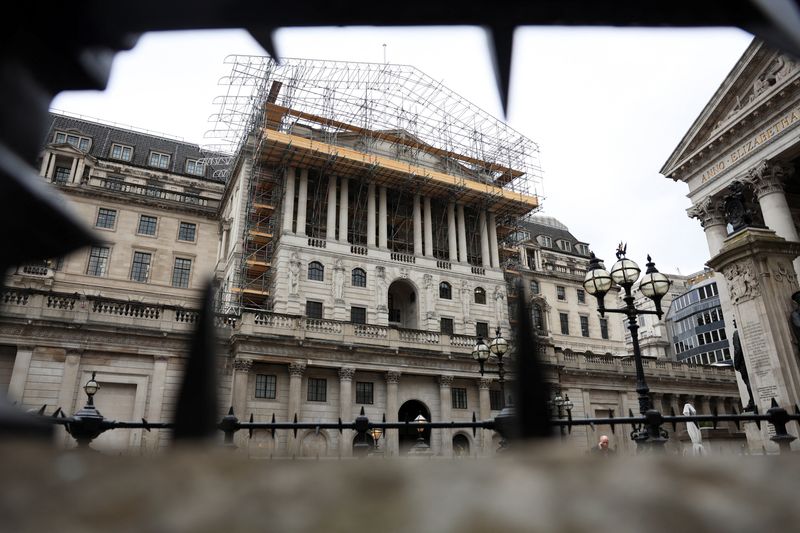
By Naomi Rovnick, Lawrence White and David Milliken
LONDON, Sept 2 (Reuters) - British banks are increasingly pledging higher-risk assets such as loans linked to high-interest store cards and vehicle leases as collateral at the Bank of England, a Reuters review of BoE filings shows.
On August 18, banks pledged £1.9 billion worth of the BoE's highest-risk type of collateral at its weekly auction for six-month funds, its data shows, the most since March 2020 and three times as much as in the previous week.
In total, Reuters calculations show the BoE has about £17.8 billion of what it calls "Level C" collateral on its books from its Indexed Long-Term Repo (ILTR), up from £8.7 billion a year ago and under £1 billion in mid-2024.
Such transactions show the extent to which Britain's central bank is exposed to higher-risk and potentially illiquid assets. The European Central Bank, meanwhile, has tightened its criteria for acceptable collateral in recent years, worried that a central bank stamp of approval increases demand for riskier securities that could be hard to sell in a crisis.
A BoE spokesperson said the ILTR was designed to allow firms to use a broad range of assets as collateral while allowing the BoE to protect itself through what it described as robust risk management.
British commercial banks use cash held in accounts at the BoE for wholesale transactions. The growing use of the ILTR to receive this cash is an intended consequence of the BoE's 2022 decision to reverse the £895 billion of quantitative easing it undertook from 2009 to 2021, which flooded the financial system with cash.
Reuters analysis of the BoE's Level C collateral list showed that the British central bank accepts a range of products in categories that the ECB has disallowed under its tighter rules on acceptable loan security, including several debt products that package up and sell the future payments on homeowners' mortgages.
The securitisation of mortgage-backed debt and other loans was a major contributor to the 2008 financial crisis as it encouraged risk-taking by lenders who were able to quickly sell the debt on.
"The BoE has got good reasons for wanting to buy grade C assets but there’s a risk that if they do too much then that can encourage bad lending. I think they probably understand that already," said William Allen, a visiting fellow at the National Institute of Economic and Social Research and a former head of the BoE's money markets division.
The central bank's spokesperson said the BoE continually reviews its framework to ensure that it remains consistent with its risk tolerance objectives.
Advertisement
The BoE charges banks a higher interest rate and applies a bigger "haircut" to riskier assets, meaning it lends less than the asset's full value to protect itself from losses.
Level C collateral has made up between a fifth and a quarter of the collateral accepted at the ILTR over the past year, but growing use of the facility means that in absolute terms it has more than doubled.
"It is possible that the non-BoE market for these assets might not be as active as it was because there's a lower appetite for credit in private markets," said Moyeen Islam, fixed income analyst at Barclays.
The $3.5 trillion global private credit industry has expanded rapidly in recent years with promises of higher yields, but also drawn growing scrutiny from regulators amid a slew of negative headlines and high-profile losses.
HOME LOANS, VEHICLE LEASES, STORE CARDS
Investec-linked Temese Funding's loan notes, which S&P Global says are backed by heavy equipment and vehicle leases that feature large late-stage instalments known as balloon payments, are on the BoE's list of Level C collateral.
The ECB in effect excluded such products from its acceptable collateral pool in January, analysis of the rule change by law firm Jones Day showed.
The BoE does not detail which specific assets on its Level C list have been used as collateral in the ILTR.
Securities issued by Harben Finance, which public filings show is controlled by Barclays and owns payments on buy-to-let mortgages that were originated by former UK lender Bradford & Bingley before its 2008 government rescue, are also on the BoE's Level C list. Some tranches of the debt have been downgraded twice by Fitch Ratings and once by S&P Global in the past year.
Among other assets eligible for the BoE's auction are loan notes backed by KKR-backed NewDay's credit cards, which Fitch Ratings said were aimed at higher-risk borrowers, and debt issued in 2024 by the Small Business Origination Loan Trust, which parcels up and sells loan payments from company owners who have borrowed through Funding Circle's financing platform.
S&P Global said in an August 21 note that almost a fifth of the loans in this pool of Funding Circle debt would likely default. A spokesperson for Funding Circle declined to comment.
(Reporting by Naomi Rovnick, Lawrence White and David Milliken; Editing by Dhara Ranasinghe and Kirsten Donovan)
Source: “AOL Money”
