


Gen Z Gets Fourfold Pay Growth When Switching Jobs, While Gen X Sees Less Benefit
Gen Z Gets Fourfold Pay Growth When Switching Jobs, While Gen X Sees Less Benefit

Sarina TrangleSat, July 18, 2026 at 7:05 PM UTC
0

Young people often see wage growth when they switch employers.Credit: Getty ImagesKey Takeaways -
Younger workers, including Gen Z and millennials, see significantly higher pay increases when switching companies than do those in older generations, according to a report from Bank of America Institute.
That’s often because older workers are in higher-paying roles, where they are more likely to be rewarded for their loyalty.
How much of a pay increase can you expect with your next job offer? It might depend on your age.
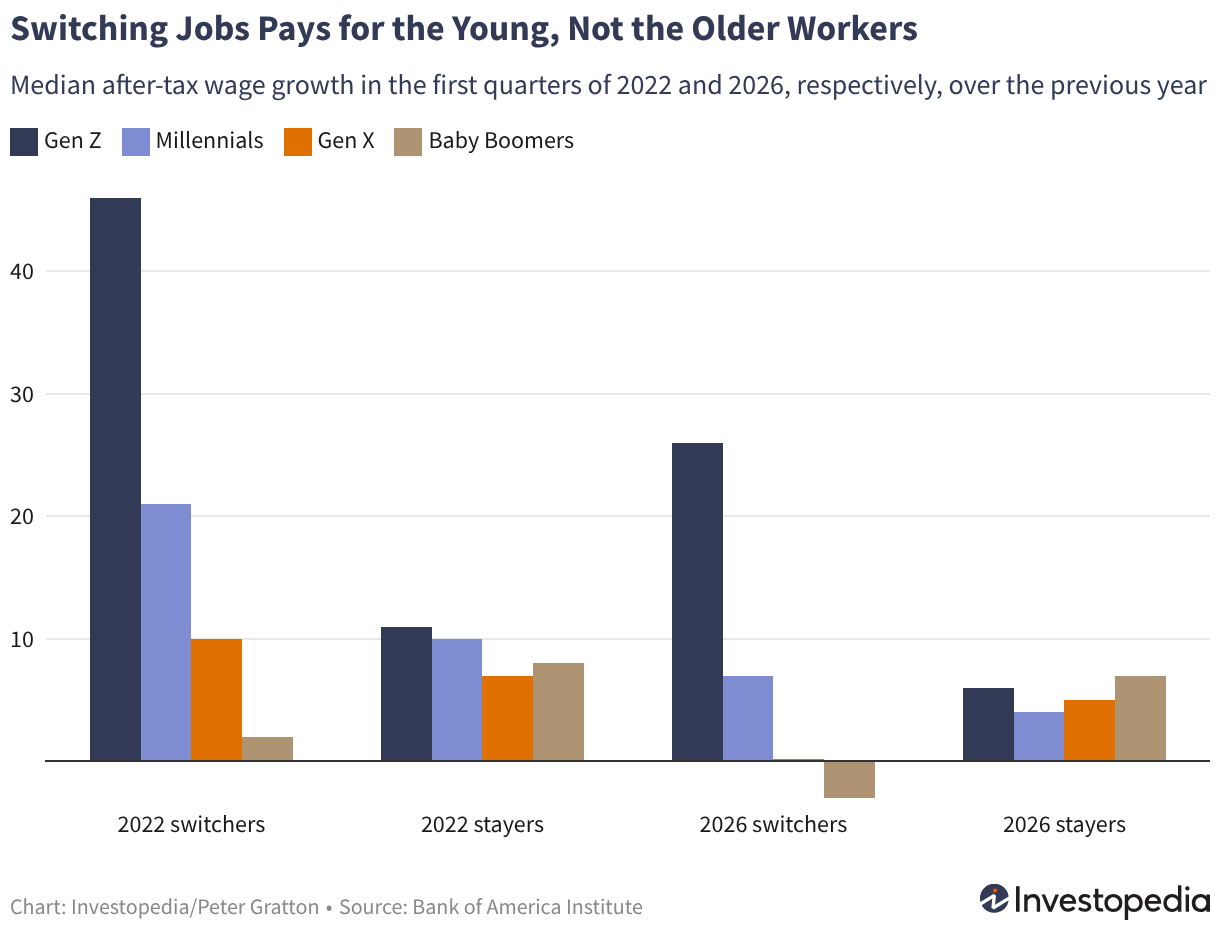
Gen Z workers who joined a new company had about four times the wage growth of those who stayed put, according to a Bank of America Institute analysis comparing median pay in the first quarter of 2026 with a year earlier. Millennials who switched got about twice the pay increase of those who stuck with their employer.
But the job-switching premium has largely dropped away for older workers. Gen Xers and baby boomers tended to experience greater wage gains by staying at their company, the Institute said.
Why This News Matters
Job-hopping used to be the surest way to a raise. That’s still true if you’re early in your career, but the payoff is shrinking for everyone. For older and higher-paid workers, staying put now often pays more than leaving.
The gap reflects that many young people start at the bottom of the career ladder, with more opportunities for quick advancement. They may be moving from part-time to full-time jobs or moving into roles that use skills they built in school or training programs, said Joe Wadford, an economist at Bank of America Institute. Older adults tend to already hold higher-paying jobs, where loyalty is rewarded because they bring more sought-after expertise or experience.
Younger workers may have more incentive to seek out higher wages, given that financial pressures tend to ease as Americans age, Wadford said. Older adults—especially those who own homes—may be somewhat shielded from cost-of-living increases, and are able to prioritize finding a remote or flexible position, he said.
Younger people need to out-earn fast-rising expenses, Wadford said. “They’re taking on more financial responsibilities like buying a house, buying a car, maybe even starting a family,” he said.
Advertisement
Still, the labor market has been tough for all generations. Many employers have kept their workforces the same size. With job growth flattening, companies are less likely to have to compete for talent and offer higher compensation, Wadford said.
The gap between switchers’ and stayers’ pay is the smallest in seven years, and Gen Z switchers’ raises have fallen about 20 percentage points since 2022, the Institute said. For Gen Xers and baby boomers, pay bumps from taking new jobs are largely gone: those who stayed saw steady raises, while those who left saw pay stay flat or slip.
“We’ve been in this low-hire, low-fire labor market,” Wadford said. “Companies might feel like they don’t necessarily have to offer the same kind of pay premiums that they have in the past in order to incentivize people to switch.”
The sluggish labor market has curtailed income growth from the first quarter of 2025 to the first quarter of 2026. More than half of Americans who stuck with their employer saw their pay stall or decline, often because of rising benefit costs. About 44% of those who joined a new firm also had salaries that stayed flat or fell, the Institute said.
Even so, Wadford said there are reasons to be optimistic: payroll growth has picked up, and more people are finding new opportunities. The portion of workers joining a new company hit 13.5% in early 2026, up from 12.9% a year earlier.
“There are signs of life in the labor market,” Wadford said.
on Investopedia
Source: “AOL Money”
