


‘It’s Redneck Envy’: Dave Ramsey Defends Billionaires’ Yachts With Ratio Logic
‘It’s Redneck Envy’: Dave Ramsey Defends Billionaires’ Yachts With Ratio Logic

Joel South Mon, November 9, 2026 at 11:00 PM UTC
0
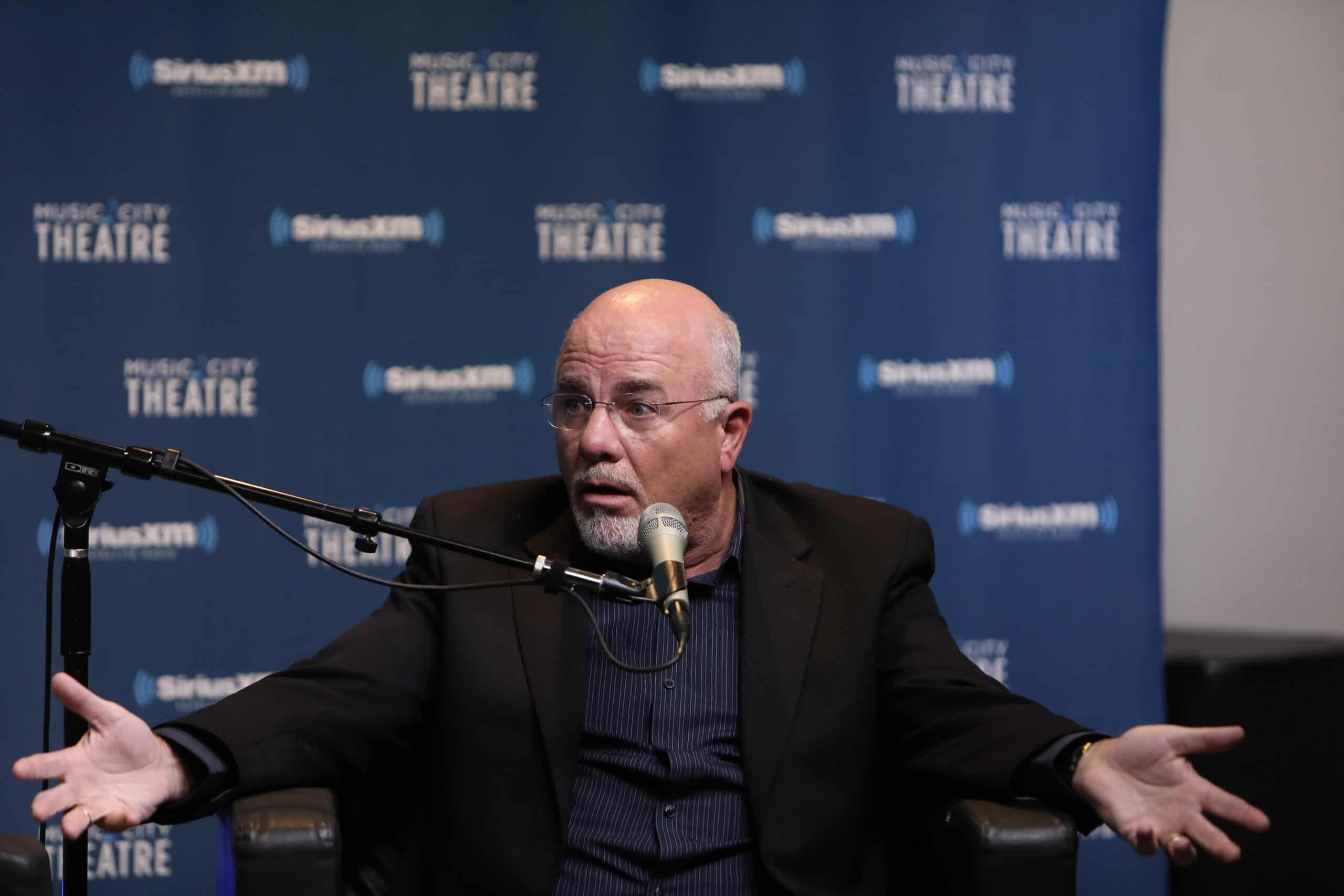
Photo by Anna Webber/Getty Images for SiriusXM (Photo by Anna Webber/Getty Images for SiriusXM)Quick Read -
Dave Ramsey argues purchases should be judged as a ratio of wealth: Zuckerberg's $300M yacht equals just 0.14% of his $222B net worth.
Ramsey's rule caps all motorized assets at half your gross annual income and advises against new cars until net worth hits $1 million.
Liquid net worth is the right denominator, and home equity should be excluded from that figure, since two people worth $800,000 can face wildly different financial realities.
On a recent episode of Ramsey Everyday Millionaires, a caller asked whether a boat costing more than his annual income was too expensive. The host pivoted to defend Mark Zuckerberg's 387-foot superyacht, a Feadship-built vessel called Launchpad valued at roughly $300 million, by measuring it against the billionaire's nine-figure wealth rather than its sticker price. He then turned that logic on his own audience. "No one should ever have a car that nice. There's starving children somewhere. Like your car caused children to starve. Would you shut up?" He labeled the impulse "redneck envy" and mocked "oversaved people that think they're Jesus" who believe "the only car you can drive and still be holy is a '93 Camry."
The stakes for any reader are concrete. Judge purchases by price tag alone and two predictable mistakes follow. You either deny yourself things you can easily afford and die with a portfolio you never touched, or you copy what wealthy people buy without copying the balance sheet underneath it and end up house-poor, boat-poor, or truck-poor.
The ratio is right, the threshold is what's missing
Ramsey's framing is mathematically sound. A purchase's pain is a function of what percentage of your wealth and income it consumes. Run the Zuckerberg math: a $300 million yacht against a net worth that Forbes tracked at around $216 billion in early November 2026 works out to well under 0.15% of his wealth. The proportional equivalent for someone with a $500,000 net worth is a $750 jet ski. For someone with $100,000 to their name, it is a $150 kayak. Worth noting as well: Launchpad's annual running costs are estimated at $30 million, a figure that, applied at the same ratio, translates to roughly $40,000 a year for a person with a $300,000 net worth.
That is the lens. Now apply it to the toys most readers actually consider. A $90,000 pickup truck purchased by someone with a $250,000 net worth represents 36% of everything they own, and it sheds value every month. The same truck purchased by someone with a $4 million net worth represents about 2%. Identical sticker price, vastly different financial event.
Ramsey's own long-standing rule makes the threshold explicit: the total value of all motorized things you own (cars, boats, motorcycles, RVs) should not exceed half your annual gross income. On a $120,000 household income, that caps your combined fleet at $60,000. On a $60,000 income, the cap falls to $30,000. The logic is straightforward: anything with a motor loses value, so the more of your income tied up in depreciating assets, the more of your wages quietly evaporate each year. Ramsey pairs this with a second threshold, advising against buying a brand-new car unless your net worth has reached at least $1 million.
The variable: liquid net worth, not paper net worth
The factor that changes the answer for almost every reader is which net worth number you plug into the ratio. Total net worth includes your primary residence, which you cannot spend without selling and moving. Investable net worth excludes the house and counts only retirement accounts, brokerage balances, cash, and other liquid assets.
Advertisement
Two readers with identical $800,000 net worths can be in completely different positions. Reader A has a $650,000 paid-off house and $150,000 in a 401(k). Reader B has a $200,000 house with a small mortgage and $600,000 invested. A $40,000 bass boat is 27% of Reader A's investable assets and a serious bite. That same boat is roughly 7% of Reader B's investable pile. Same boat, same buyer demographics, opposite financial reality.
Meta Platforms (NASDAQ:META) CEO Zuckerberg can write a check for a superyacht because his wealth is concentrated in liquid equity in a public company. Forbes tracked his net worth at around $216 billion in early November 2026, down from a peak of roughly $266 billion in late September, as a punishing $9.89 billion legal charge tied to the August 2026 multistate attorneys general settlement on teen mental health weighed on Meta's Q3 results and pulled META shares lower. At any of those figures, a $300 million vessel is a rounding error on his balance sheet. Most middle-class buyers face the opposite situation: their net worth figures are dominated by a house they live in, making any toy ratio against spendable assets far worse than the headline number suggests.
Meta's financial trajectory is the engine behind Zuckerberg's wealth, even as AI infrastructure spending and litigation costs increasingly reshape the profit picture. The company posted full-year 2025 revenue of $200.97 billion, then ran Q2 2026 revenue of $60.8 billion, up 28% year over year, though operating income fell 8% to $18.8 billion as $2.4 billion in legal charges and $1.18 billion in severance from the May 2026 headcount reduction pushed operating margin from 43% to 31%. Q3 2026 brought fresh pressure: revenue climbed to $64.6 billion, up 26%, but operating income dropped to $12.99 billion, a 37% decline, as the $9.89 billion legal settlement charge compressed operating margin to 20%. Excluding that charge, Q3 operating income would have risen 11% year over year, a sign the core advertising business remains healthy even as one-time costs distort the reported numbers.
One maritime footnote is worth clarifying. In 2025, Zuckerberg sold the original 220-foot Wingman support vessel to Walmart heiress Nancy Walton Laurie, who renamed it Kalm. Rather than simplify his fleet, he replaced it with a larger 262-foot support yacht, formerly known as U-81, and transferred the Wingman name to the new vessel at a cost of roughly $100 million. The Launchpad itself drew fresh attention in late May 2026, when it docked on Lake Union in Seattle just as Meta announced layoffs affecting 1,395 employees in King County, part of an 8,000-person global workforce reduction. The yacht then traveled north to Alaska's Auke Bay in July 2026, and by September 2026 had crossed the Pacific and docked at Yokohama's Minato Mirai waterfront, where it sat alongside the 375-foot superyacht of a Japanese billionaire currently suing Facebook. Billionaires do reassess their assets, but in Zuckerberg's case each reassessment has produced a larger footprint rather than a smaller one.
How to run the calculation on yourself -
Add up your investable net worth: retirement accounts, taxable brokerage, cash, and any business equity you could actually sell. Exclude your primary residence and personal vehicles.
Take the price of the toy you are considering and divide it by that investable figure. If a depreciating purchase exceeds 5% of investable net worth, expect to feel it.
Separately, add the price of the new toy to the resale value of every motorized thing you already own. If that sum is more than half your gross annual income, the math is telling you no.
Compare against Ramsey's positioning of wealth-building as the prerequisite for both enjoyment and generosity: "You live like no one else. Later you can live and give to the starving children like no one else."
Judge the purchase by what it costs you as a fraction of what you have. That is the entire mechanic.
Editor's note: This pass Zuckerberg's net worth to reflect Forbes data showing his fortune at approximately $216 billion in early November 2026, down from a peak of roughly $266 billion in late September 2026, and added Meta's Q3 2026 results showing revenue of $64.6 billion (up 26%) and a 37% decline in operating income to $12.99 billion, driven by a $9.89 billion legal charge from the August 2026 multistate attorneys general settlement on teen mental health and social media.
Contact editorial@247wallst.com for any questions or corrections.
Source: “AOL Money”
