


SK Hynix and Samsung Just Sent a Major Warning to Micron Investors
SK Hynix and Samsung Just Sent a Major Warning to Micron Investors

Adam Levy, The Motley FoolSun, August 9, 2026 at 11:50 PM UTC
0
Key Points -
Memory chip prices have soared as demand far outstrips supply.
SK Hynix and Samsung showed some weakness in chip pricing last quarter.
The effect could extend well beyond the current quarter, and investors need to consider the long-term implications.
10 stocks we like better than Micron Technology ›
&&
Micron(NASDAQ: MU), SK Hynix(NASDAQ: SKHY), and Samsung(OTC: SSNLF) are some of the highest-flying stocks in the market this year. Their tremendous earnings results have been driven by a massive shortage in memory chips, a market dominated by the three companies. As AI hyperscalers buy up as many chips as possible, memory prices have gone through the roof.
Recent earnings results from SK Hynix and Samsung contain a major warning for Micron investors that could affect not just this quarter's results, but results well into the future. It could have a huge effect on the price investors should be willing to pay for the stock today.
Missed Nvidia in 2009? This Rare Signal Is Flashing Again.In 2009, a "Double Down" signal flashed for a little-known chipmaker called Nvidia. For the first time in years, that same "Total Conviction" signal is flashing for a company 1/100th the size of Nvidia. Continue »
&&
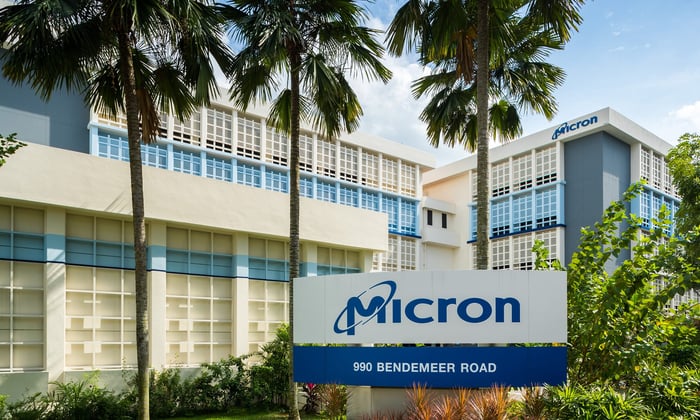
Image source: Micron.
What did SK Hynix and Samsung report?
The all-important driver of earnings for the three memory chip stocks over the last year has been pricing. The chipmakers renegotiate pricing for their chips frequently based on supply and demand. It takes years for a new manufacturing plant to start producing chips at scale, which means a spike in demand can send chip prices significantly higher. Once additional supply enters the market or demand falls, prices fall, and with higher operating costs, profits fall even more.
That's the cyclical nature of the memory chip market, but the market understands it well. It's why investors are paying single-digit earnings multiples for the chipmakers today. They expect the earnings cycle to approach its peak in the near future.
What's worrisome in SK Hynix's and Samsung's earnings releases is that peak earnings might be lower than anticipated. That's evidenced by weakness in pricing relative to expectations for both companies over the last three months.
To be sure, SK Hynix still increased DRAM pricing by about 30% sequentially, and Samsung increased DRAM chip pricing by more than 40%. NAND pricing climbed even faster, mid-50% for SK Hynix and high-60% for Samsung.
Still, analysts were expecting better. Goldman Sachs analysts said they were looking for 39% growth for SK Hynix's DRAM chips. The analysts now expect just 19% price improvements for the current quarter. Morningstar's analysts were disappointed by Samsung's pricing, which fell short of their 48% estimate.
The results suggest Micron could also fall short of expectations for its DRAM pricing when it reports its quarterly earnings next month. Still, it's important to look into what might have caused the shortfall and what it means for each company's stock price.
Advertisement
What's weighing on memory chipmakers?
Samsung and SK Hynix's lower-than-expected pricing indicates that AI demand may be slowing. That's exacerbated by SK Hynix's report showing slower-than-expected HBM4 shipments last quarter. Management assured investors that it was ramping HBM4 production in the second half of the year, which would positively affect overall pricing.
Perhaps the biggest weight on pricing is the long-term agreements the chipmakers are signing with customers. These agreements lock in pricing for customers for years in advance, leading to lower peak pricing, but they also protect against downside risk. It's a hedge against demand drying up and gives the chipmakers the confidence to build out new manufacturing capacity.
The effect is already showing up, with pricing climbing more slowly than anticipated. Micron said it had covered 20% of its DRAM sales and about one-third of its NAND sales with long-term agreements as of last quarter. Those numbers could continue to climb, but they could also weigh on pricing and earnings.
As such, peak pricing is likely to fall short of analysts' prior expectations. While Micron and its competitors could fetch a slightly higher earnings multiple than in past earnings cycles due to long-term pricing stability, the earnings they'll be multiplying by will be lower. What's more, the potential long-term downside to earnings remains, as long-term agreements could simply pull demand forward, ultimately leading to a prolonged slide in earnings.
Should you buy stock in Micron Technology right now?
Before you buy stock in Micron Technology, consider this:
The Motley Fool Stock Advisor analyst team just identified what they believe are the 10 best stocks for investors to buy now… and Micron Technology wasn’t one of them. The 10 stocks that made the cut could produce monster returns in the coming years.
Consider when Netflix made this list on December 17, 2004... if you invested $1,000 at the time of our recommendation, you’d have $399,832!* Or when Nvidia made this list on April 15, 2005... if you invested $1,000 at the time of our recommendation, you’d have $1,374,595!*
Now, it’s worth noting Stock Advisor’s total average return is 968% — a market-crushing outperformance compared to 215% for the S&P 500. Don't miss the latest top 10 list, available with Stock Advisor, and join an investing community built by individual investors for individual investors.
See the 10 stocks »
*Stock Advisor returns as of August 9, 2026.
&&
Adam Levy has no position in any of the stocks mentioned. The Motley Fool has positions in and recommends Goldman Sachs Group and Micron Technology. The Motley Fool has a disclosure policy.
Source: “AOL Money”
