


Why GM Is Bringing Back The 5.7L Small Block V8 Engine
Why GM Is Bringing Back The 5.7L Small Block V8 Engine

Mike GarrettSun, July 26, 2026 at 3:15 PM UTC
0
Chevrolet
Not that long ago, it seemed like the iconic American V8 engine would become an endangered species in the face of tightening emissions regulations and an industry-wide shift away from large-displacement engines toward smaller, turbocharged motors. It seems, however, that those declarations and predictions of the V8's death were a little premature.
Not only have American companies stuck with V8 engines in both their pickup trucks and performance cars, but brands like Ram have reintroduced their V8s after initially dropping them for smaller turbo engines. Then there's General Motors, which has taken the V8 revival even further, announcing a new line of larger, more powerful V8 engines that will power the 2027 Corvette, upcoming Chevrolet and GMC pickup trucks, and other future models.
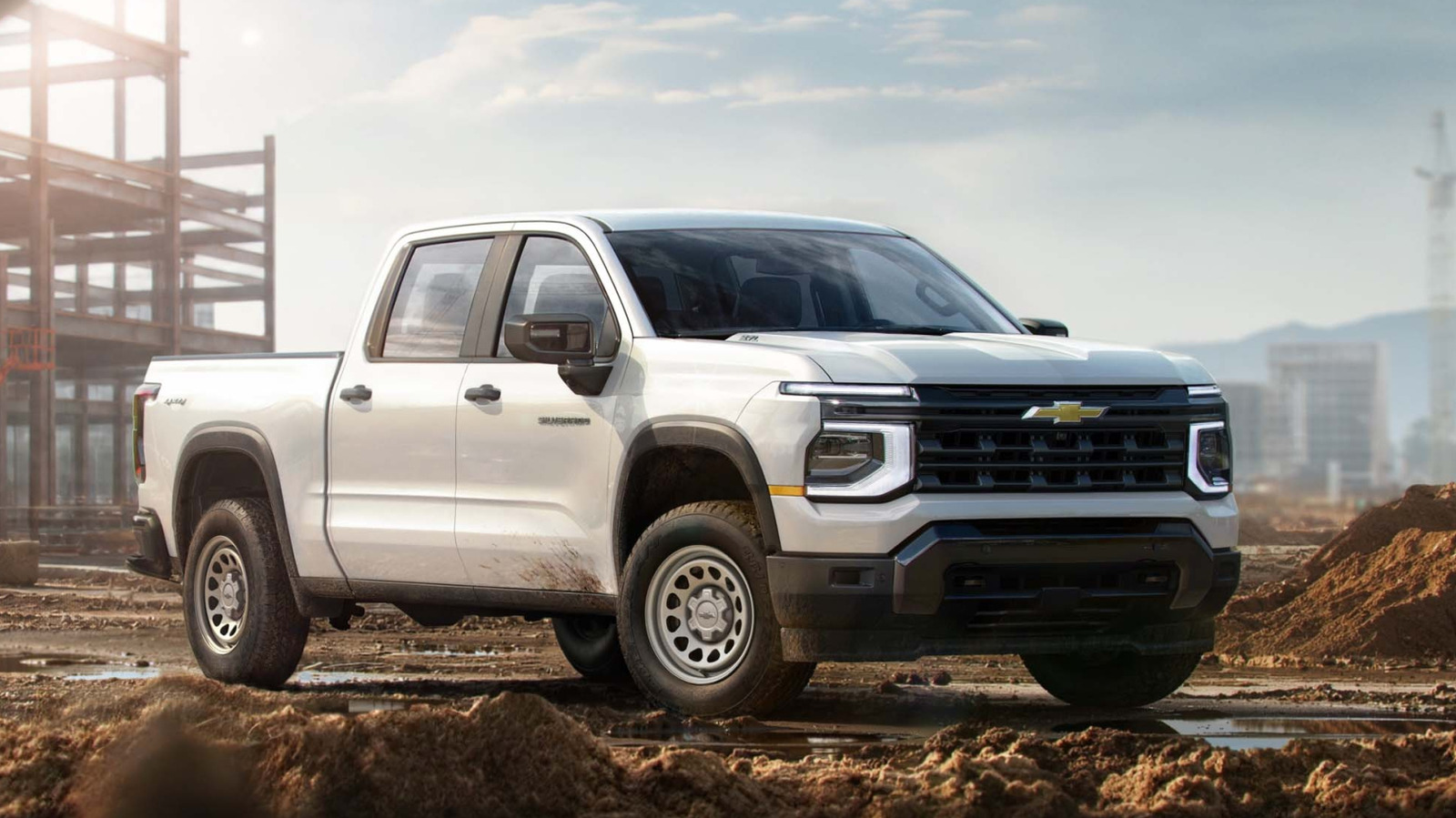
One of these new V8s will displace 5.7 liters, which roughly equates to 350 cubic inches — an iconic number in the history of the GM small-block V8. For decades, the classic 350 small block was one of the company's most ubiquitous engines, but GM isn't just bringing back the 5.7 for nostalgia's sake. This next-gen 5.7 V8 will be the new base V8 for the 2027 Chevy Silverado and GMC Sierra 1500 pickups, replacing the 5.3-liter engine that's served as GM's volume truck and SUV V8 for many years.
Read more: 12 Of The Most Reliable V8 Engines Ever Made
The legend of the Chevy 350
JoshBryan/Shutterstock
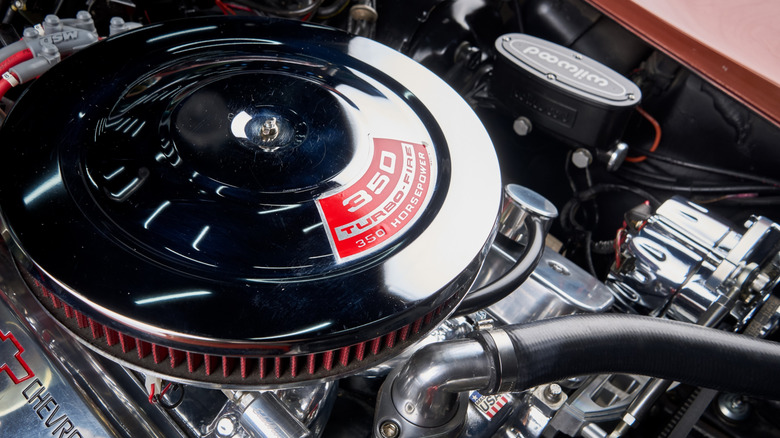
The General Motors small-block V8 engine has been produced in many different displacements and variations over its long history, and the 5.7-liter version was known as one of the most popular engines ever made. The Chevy 350, as it was known before we all switched to metric displacement figures, first appeared in late 1960s Camaros and Corvettes as a high-performance option, and eventually spread across the entire Chevrolet and GM lineup.
Even as the small block evolved through the '80s and '90s, 5.7 liters remained one of the most common displacements, used in both high-performance sports cars and hardworking pickup trucks alike. When the groundbreaking new Gen III LS1 engine debuted in the late '90s for the Corvette and Camaro, it retained the same 5.7-liter displacement.
Advertisement
Eventually, GM would replace the 5.7 LS1 with larger LS2 and LS3 engines in its performance cars, while the 5.3-liter V8 would take the place of the 5.7 as the volume workhorse V8 in trucks — albeit with larger 6.0- and 6.2-liter engines available as options in some trucks. The last new GM vehicle to use a 5.7-liter V8 was the 2005 Cadillac CTS-V, which had a potent Gen III LS6 engine shared with the C5 Corvette Z06.
No replacement for displacement
General Motors
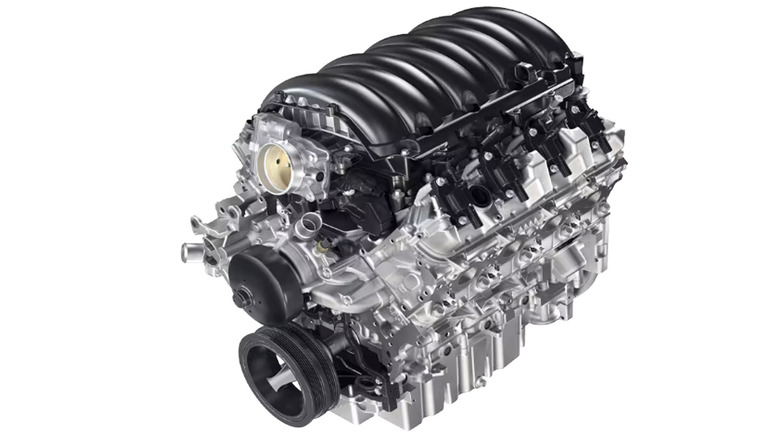
The reborn 5.7-liter V8 will be part of a full next-generation V8 family that also includes a new 6.7-liter engine for the Corvette and a 6.6-liter V8 to replace the L87 6.2 currently available in the Silverado, Sierra, and GM's full-size SUVs. In each case, the new V8 is notably larger than its predecessor, a move that bucks the downsizing trend that we were seeing across the industry.
GM has yet to reveal the full specs and power figures of the next-gen 5.7, but the L84 5.3 V8 it's replacing is rated at 355 hp and 384 lb-ft of torque. With the bump up to 5.7 liters, the base V8 trucks should see a modest improvement in horsepower and torque, and a speculated boost in fuel efficiency as well, likely from the larger engine's ability to make its torque at a lower RPM than before.
Sure, it might just be a 0.4-liter bump over the engine it's replacing, but the revival of the iconic GM 5.7-liter V8 is a big deal. We'll be looking forward to seeing how this engine performs as the new base V8 for the Silverado and Sierra — and, most likely, the next-generation Tahoe, Suburban, and Yukon SUVs as well.
Want the latest in tech and auto trends? Subscribe to our free newsletter for the latest headlines, expert guides, and how-to tips, one email at a time. You can also add us as a preferred search source on Google.
Read the original article on SlashGear.
Source: “AOL Money”
